This content is intended for the public covered by the exceptions of the Charter of the French language and its regulations. If you read on, you confirm that you fall within one of these exceptions.

Preventing false fire alarms
Did you know that 41% of firefighters’ calls in Laval are caused by false fire alarms? You can help reduce these unnecessary emergency responses.
False alarms and their consequences
A false fire alarm is an alert transmitted to 911 through a monitoring center that causes firefighters to mobilize when there is no fire, no risk of fire and no danger. False fire alarms entail several consequences:
- Mobilizing SSIL resources.
- Increasing response times for real emergencies .
- Raising the risk of incidents during emergency responses.
- Reducing occupants’ trust in alarm signals, which can hinder a safe evacuation.
If you trigger an alarm system by mistake, please report it immediately by contacting your central fire alarm station so that firefighters are not required to mobilize.
Tips to prevent the activation of a home alarm system
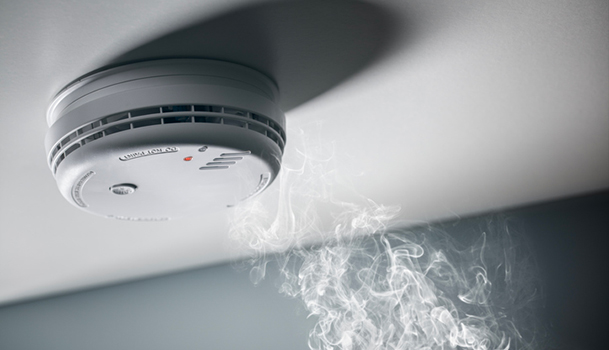
Light smoke inside a home, often caused by cooking appliances, shower steam, or heating, accounts for 40% of false alarms. And it’s unfortunate to see a fire truck show up in front of your house… all because of overly toasted bread!
Installation and maintenance
- If possible, make sure smoke alarms are installed far from sources of smoke or water vapour.
- Replace your smoke alarms every 10 years.
- Frequently clean the outside of smoke alarms to remove dust.
How to program your System to prevent false alarms
An alarm system installed indoors can be programmed to minimize false alarms and avoid unnecessary firefighter dispatches:
- Configure your device so that there is a 30-second delay before the system communicates with the remote monitoring centre.
- Once the alarm is initiated, you have 60 seconds to enter your access code to cancel the alarm and avoid its transmission to the remote monitoring centre.
In other words, you have 30 seconds to press any key on your keyboard (initiation) and 60 additional seconds to enter your code if you are sure that the alarm is false.
8 ways to prevent false fire alarms in buildings
Whether in an apartment building or an industrial, institutional, or commercial facility, alarms too often are triggered by mistake, inadvertently, poor maintenance or equipment malfunction. You can prevent false fire alarms as follows:
Fire alarm systems must be installed in compliance with the building code and standard S-524. Non-compliance with these requirements may lead to fire alarms being activated.
- Install certified protective covers.
- Do not hang anything from fire prevention equipment.
- Cooking fumes can trigger a smoke alarm. For that reason, it is important to avoid venting cooking fumes in the direction of the alarm system.
- Vaping or cigarette smoke can trigger a smoke detector.
- In certain cases, consider moving a detector placed in an inappropriate location conducive to false fire alarms (e.g., furnace room, kitchen, or a location too close to a ventilation opening).
- When performing work, make sure the smoke detectors in the work area are protected from dust and particles, and notify the central fire alarm station of your renovation dates.
- Place a note in plain view on the fire alarm panel, explaining that the system is connected to a central fire alarm station that must be notified before renovation work is started.
- Take the appropriate measures to avoid needless alarm signals and remind apartment building occupants not to contact 911 unnecessarily.
When the cause of the alarm cannot be identified, check to see if your system is defective by having it inspected by a specialist. Various factors can contribute to system failures, including dust accumulation, obsolescence, humidity, a connection problem, a programming error, damaged wiring, or a power surge.
- Be careful not to trigger an alarm when washing with water. Manual alarm stations in particular are prone to being accidently activated during cleaning.
- Since water infiltration can trigger an alert, maintain your home to limit the risk of a leak or an infiltration.
- Temporarily or permanently protect detectors with protective boxes, if applicable.
- Make sure sprinklers are adequately protected against the cold and that heating systems function properly. Underwater or wet sprinkler mains exposed to freezing are susceptible to breaking, which can cause significant damage and trigger a false alarm.
- A poorly maintained sprinkler system (excess pressure pump / non-functional compressor, poorly adjusted control device, flowmeter not time-controlled) can trigger false alarms.
- Sprinkler systems must be maintained by qualified staff to ensure that they are in proper working order.
- Cover manual fire alarm stations with certified protective boxes that activate the alarm as soon as they are manipulated.
- Apply a tamper gel marker to devices so that a person who triggers an alarm without reason can be identified.
- Install video surveillance equipment to identify the person at fault.
- Inform residents or family members that triggering a manual alarm station without a valid reason will result in a fine being applied.