This content is intended for the public covered by the exceptions of the Charter of the French language and its regulations. If you read on, you confirm that you fall within one of these exceptions.

Prevent outdoor fires
Fires can occur at any moment. In summer, however, when the sun and heat are synonymous with barbecue season, it’s important to exercise extra caution so that you don’t start a fire by accident.
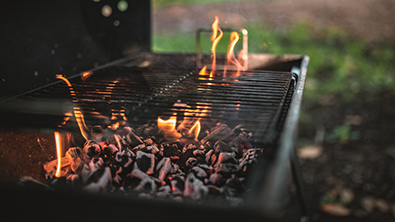
Preventing accidents with the barbecue
The indispensable tool for a successful summer can also pose a danger if it is not used properly. Make proper use of your barbecue as follows:
- Choose a recognized model (CGA, CSA, ULC, WH/ELT, UL or RBQ) and follow the directions for use included with the unit.
- Do not install a barbecue too close to a wall, your plants or other objects. Comply with the clearance instructions set out in the barbecue user guide.
- Clean and check the burners and gas lines before using your barbecue for the first time of the season. Also carry out a leak test on the lines and connections using soapy water.
How to use a propane tank
The tank supplying gas to your barbecue also requires several precautions:
- Check to make sure that the tank is not past its expiry date. Never reuse a tank that is more than 10 years old.
- Make sure that the tank stays upright when transporting it by car.
- Leave the car windows partially open. If possible, also leave the trunk partially open during transport.
Outdoor fireplaces
Outdoor fires are permitted solely in outdoor fireplaces compliant with municipal regulations.
Before purchasing an outdoor fireplace, it is essential to:
- Understand the risks associated with their use, both in terms of safety and the environment.
- Consider the impact on your neighbours to ensure harmonious cohabitation.
It may be tempting to purchase a portable fireplace that uses liquid or gel fuel, as the flames may seem less intense and more controlled that those of a traditional wood fireplace. However, bear in mind that there are risks associated with these products. The vapour can catch fire and cause a deflagration.
To ensure your safety when using an outdoor fireplace, it is important to read the City of Laval’s regulation pertaining to outdoor fireplaces.
- Carefully assess the placement of the fireplace and the general wind direction.
- Place a fire screen over the fire.
- Place the ashes in a metal container when removing them.
- Install your fireplace or cooking appliance on a fire-proof surface (concrete, gravel, grass) and not on a wooden surface.
- Make sure to install the fireplace far from the house, shed, tree branches and any other combustible equipment.
- Use a fireplace shovel to transfer the ashes to a metal container and keep the container outdoors:
- On a fireproof surface (grass, paving stones, stones, etc.).
- Where it won’t pose a risk of fire (not on a wooden balcony).
- Let the ashes cool down for a minimum seven days before disposing of them, and make sure that they are completely extinguished.
- Place cool ashes and briquettes:
- In a separate brown bag (compost) not placed in a second bag or a container.
- In the black bin (garbage) after first placing them in a bag or a container.
Preventing cigarette fires
All too often, fires start on a balcony or a terrace or in a yard before spreading to a building. Follow these tips when smoking outdoors to ensure that everyone stays safe:
- Place your cigarette butts in a fire-resistant container filled with sand or water.
- Containers used for cigarette butts should be placed on a flat and stable surface.
- Do not put out cigarettes in a flowerpot, mulch or landscaping.
- Never throw your cigarette butts over the balcony of an apartment building.
- Make sure cigarette butts are properly put out at all times.
- Never throw cigarettes or matches in the garbage.
Ashes outdoors!
Did you know that the best way to dispose of warm fireplace ashes is to store them outdoors in a covered fire-proof container? Wait at least seven days before putting them in the garbage.
Be careful of flammable outdoor landscaping elements
People often cover their garden beds with mulch made from wood chips. While mulch is useful for your garden, it can also easily catch fire. Err on the side of safety by complying with the following guidelines:
- Keep cigarettes far from mulch.
- Keep your mulch moist.
- Maintain a distance of at last 45 cm (18 in.) between the mulch and flammable materials, such as your barbecue.
- If you install electric lights on your mulch, follow the directions for use to the letter to ensure that the heat does not cause a fire.
- Favour fire-resistant awnings, curtains and trellises.
- Never leave candles, torches or outdoor fireplaces unattended.
- Use electric extension cords with the mention “outdoor use” and avoid using them permanently, as they are designed for temporary use only.
Fireworks
The use of fireworks and other pyrotechnics is strictly regulated in Laval:
- The use of fireworks can lead to serious injuries both for the person lighting them and for those watching them.
- The use of fireworks increases the risk of fire for neighbouring homes.
In Laval, a bylaw stipulates that any person wishing to purchase fireworks must get a permit to use them from the Service de sécurité incendie de Laval. This permit must be presented when purchasing the fireworks. A permit is also required to possess fireworks in a park and on a shoreline.
Even with the required permit, there is always a risk of injury when handling fireworks. When using fireworks, exercise care and considerable caution.
How to submit an application for a fireworks permit
To submit an application, please send an email to the Service de sécurité incendie de Laval’s prevention division. An inspector will contact you as soon as possible.
Mosquito coils
Like all flammable objects, mosquito coils must be used only as intended and in compliance with the instructions included with the product.
Mosquito coils were designed to be used only outdoors and should never be used indoors. They should be kept out of reach of children and far from flammable materials.
Instructions can vary from one coil to the next, but generally speaking, mosquito coils should be used as follows:
- Set the coil on the metal support frame provided at the time of purchase.
- Using matches or a lighter, light the end of the coil then immediately extinguish the flame by blowing on it. The coil will be used up gradually over a period of several hours.
- Place the coil in a fire-resistant plate to collect the ashes.
- Put out the coil with a bit of water after each use.
- Let the coil cool down for 30 minutes before touching it.
- Never leave a burning mosquito coil unattended.